Whoa!
So I was poking around a Solana wallet last week. My initial gut said the block explorer would feel clunky and sparse. But the flow surprised me with fast block indexing and clear transaction decoding. Initially I thought the explorers on Solana would be a one-size-fits-all tool, but after stepping through token metadata, inner instructions, and stake history I realized there are real UX differences that change how you debug and audit a transaction.
Really?
The first thing that popped up was RPC performance, which matters in practice. Nodes can be slow and that makes explorers lag or show stale states. On one hand explorers rely on public RPCs and indexers to assemble searchable records, though actually when they pair with dedicated indexers and snapshot caching the latency drops dramatically and the user experience becomes near-instant. That difference explains why some explorers feel snappier than others.
Here’s the thing.
I care about four things: clarity, depth, speed, and reliability. Clarity means readable fields, clear instruction names, and easy links to the program source. Depth covers decode quality for inner instructions, token metadata interpretation, and program logs, so that when something weird happens you aren’t stuck guessing what a BPF instruction did or how a SPL token’s mint authority moved around. Reliability is both uptime and honest error handling from the explorer service (oh, and by the way, somethin’ as simple as consistent 404s drives me nuts).
Wow!
The explorer I kept going back to had three practical strengths. Those strengths showed up in transaction pages and token pages. It also surfaced program pages with commit hashes and source links. Because it combined decoding, source verification, and clear account diffs in one cohesive layout, I could trace a cross-program invocation from a user signature all the way to the inner program logs without opening a dozen tabs or running my own node, which saved hours when I was debugging an airdrop edge case.
Where the rubber meets the road — my daily toolbox
Seriously?
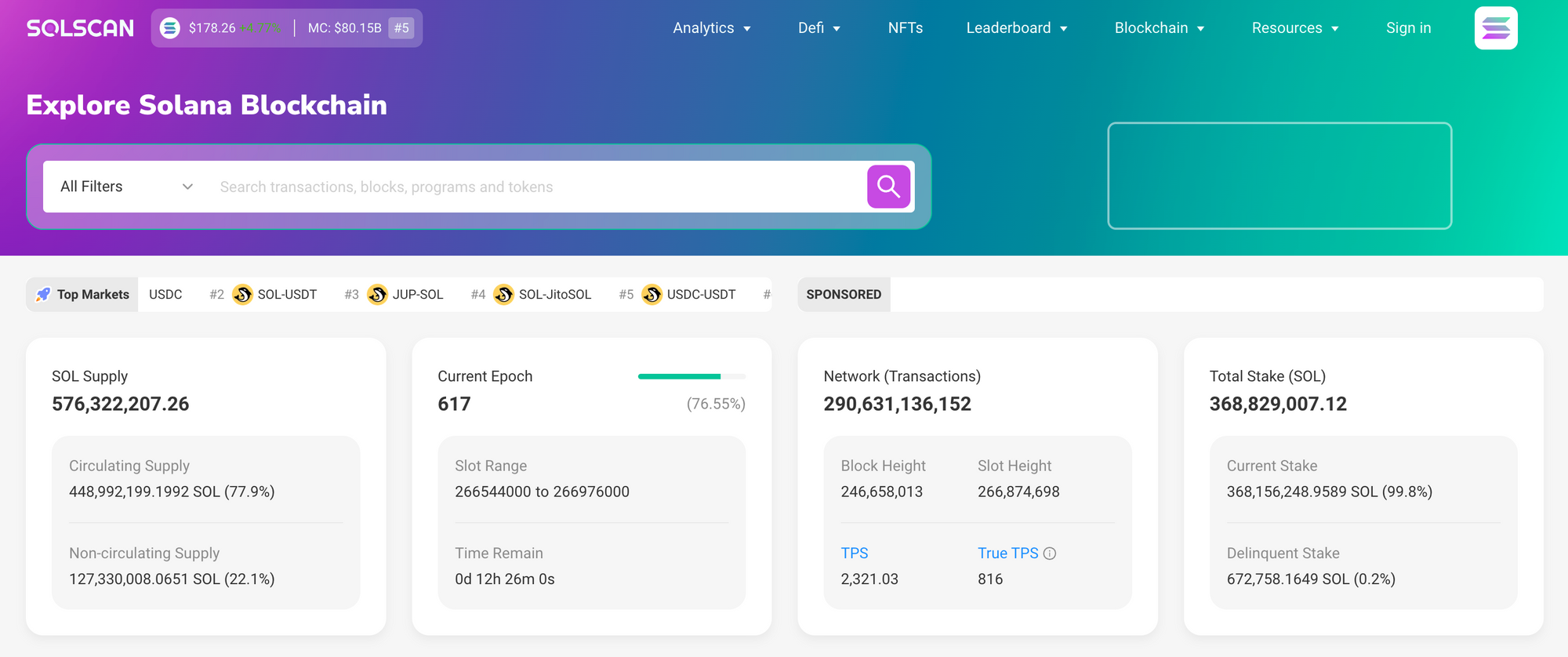
Okay, so check this out—I ended up bookmarking a site that handled those things well. It parsed token metadata reliably, showed token holders, and highlighted suspicious mint activity. My instinct said this was just another explorer, but then I noticed integrated verification badges, GitHub links for programs, and a community-driven notice system that flagged newly deployed contracts, which together made me trust the data more quickly than I expected. That site is solscan and it became my go-to when I needed quick audits or to confirm airdrops, and yes, I’m biased toward tools that let me jump from transaction ID to program source with a couple clicks because time is money and debugging is a drag.
Hmm…
Data accessibility matters to both devs and traders in different but overlapping ways. Actually, wait—let me rephrase that: devs want raw logs and instruction decode while traders want transfer totals and token supply snapshots. When an explorer offers both a nice UI and raw dumps that you can fetch via an API or export, teams can build incident tooling and traders can do forensic checks without spinning up their own indexer, which lowers the barrier to entry for small teams and hobbyists. On one hand an API-first approach helps automation, though actually a superior UI plus exportable CSVs covers 80% of use cases for a lot of folks who are not running data pipelines.
Oh man!
Here’s what bugs me about some alternatives: inconsistent decoding and lazy UX. They list inner instructions but use nonstandard labels or bury logs in collapsed menus. That makes audits harder because you spend time mapping numeric tags back to program behavior, and sometimes you need to cross-reference the Solana program library or read through source to confirm what a rename or custom CPI actually did. Initially I thought a uniform standard would emerge, but the ecosystem’s rapid growth and fragmentation meant explorers had to balance speed, storage costs, and the overhead of decoding every custom program, so compromises were inevitable.
No kidding.
If you’re new to Solana, explorers act as a translator between raw ledger bytes and human meaning. They show you balances, token mints, and CPI relationships in plain English. For seasoned devs the emphasis shifts to reproducibility and audit trails, so features like permalinks, canonical program verification, and downloadable logs become necessary parts of a professional stack rather than nice-to-haves. I’m not 100% sure about every claim an explorer makes—some metrics are inferred and not canonical—so cross-checking with cluster RPC data or a secondary explorer is still wise when you need ironclad proof.
FAQ
Which explorer should I use for quick checks?
If you want a fast, reliable first pass for transactions and tokens, a UI that decodes inner instructions and links to program source is a good start (that saves a lot of guesswork). Personally I reach for the one I mentioned above when I need speed plus clarity, but for heavy forensic work you might prefer to combine that with an RPC-level check or run your own indexer.
Can explorers be trusted for audits?
They help a lot, but treat them as tools not authorities—explorers can mislabel or infer things, and some program behaviors are custom and opaque; use permalinks, download logs, and when the stakes are high, corroborate with cluster RPC responses or a second explorer (and yes, sometimes you need to run a validator snapshot locally).